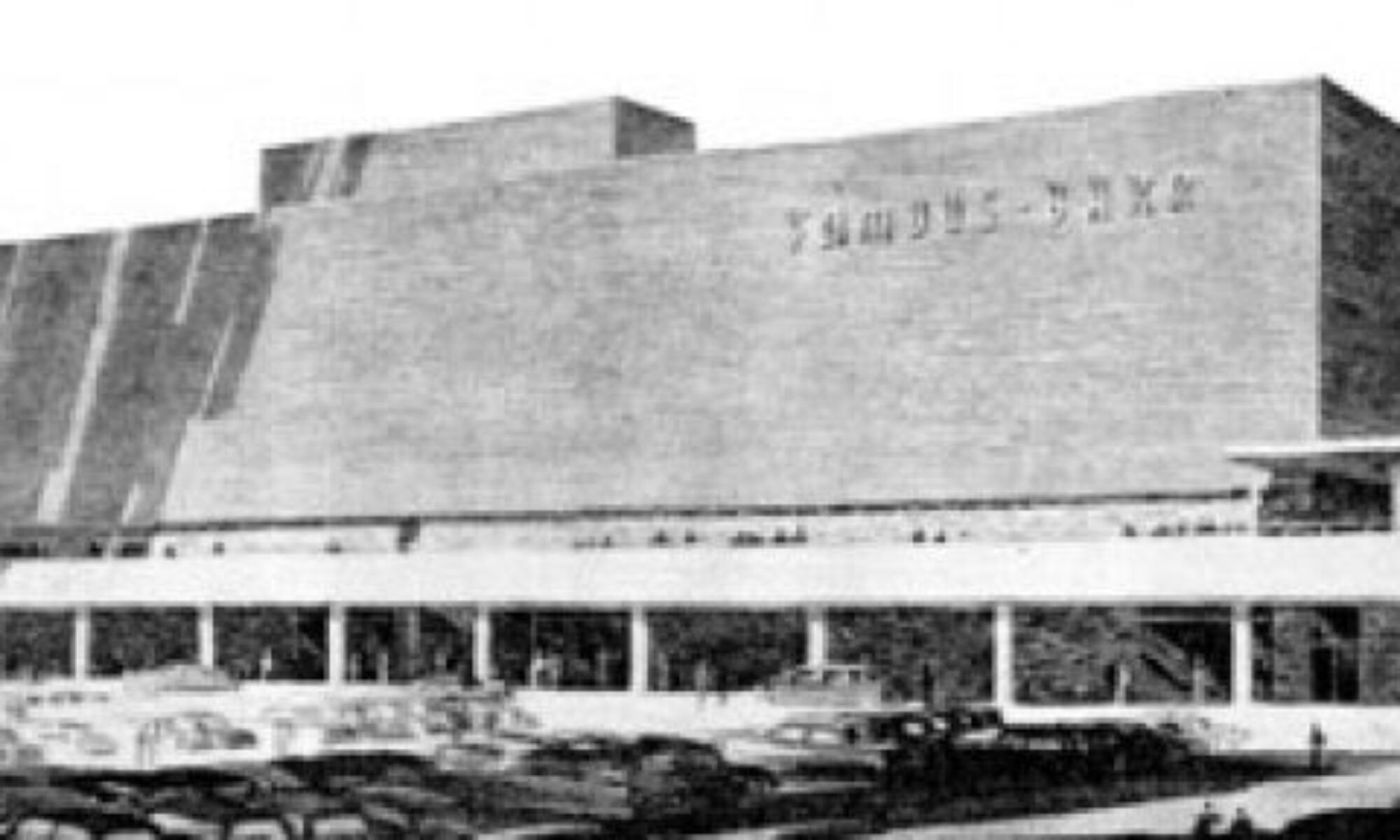
Darla Court


Darla Court, Jennings, MO
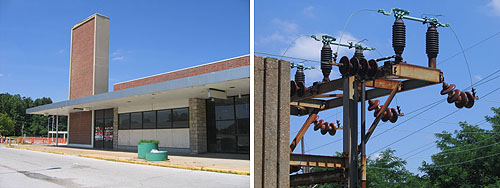
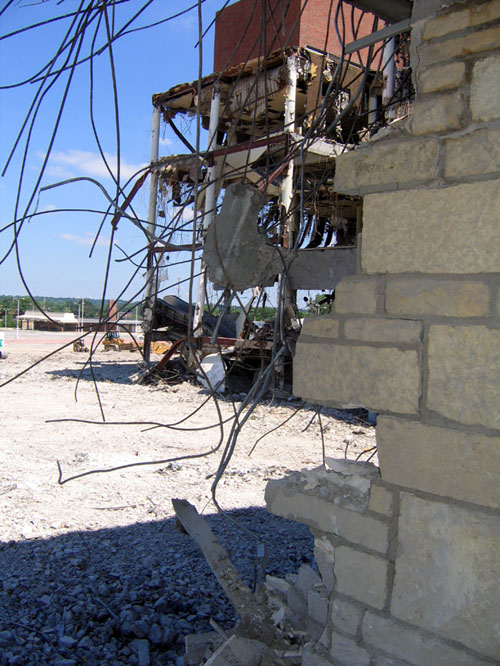
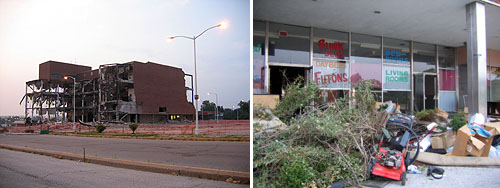
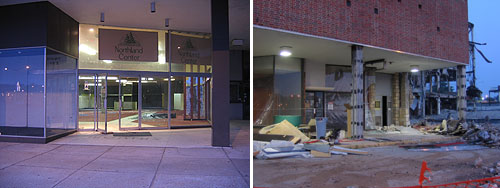
As if Northland being demolished wasn’t hard enough, I found my childhood home behind Northland (on Meadowlark) now boarded up and condemned. A tangible piece of my personal past is being wiped off the map, and the timing of it borders on overkill.

The neighborhood itself is a classic hodgepodge, with homes ranging from the early 1900s to the late 1960s, and while half of the houses are as crisp as I remember them, the other half are abandoned and rotting.

We always traversed this neighborhood on foot, so I knew it intimately…or so I thought until I took a turn down a street I’d never been down before. This small area couldn’t be more tucked away and ignored, and thus has no compulsion towards suburban civility, feeling more like a bayou swamp settlement. In the midst of Midnight in the Garden of Good & Evil I discovered a portal into The Modern WayBack Machine.
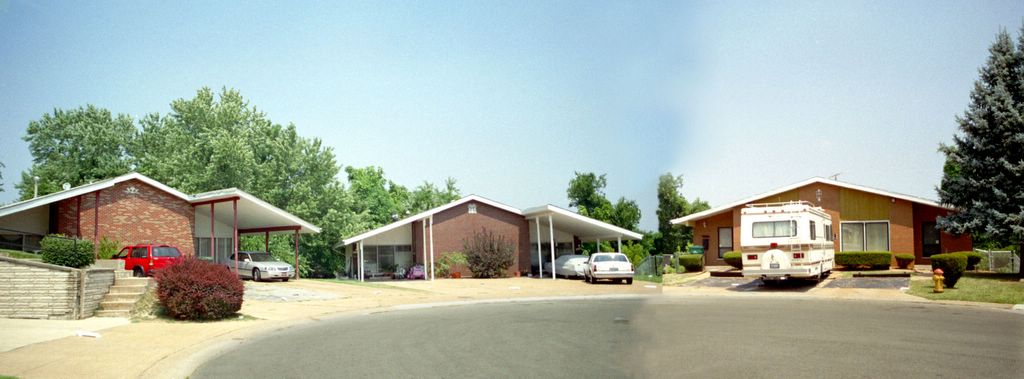
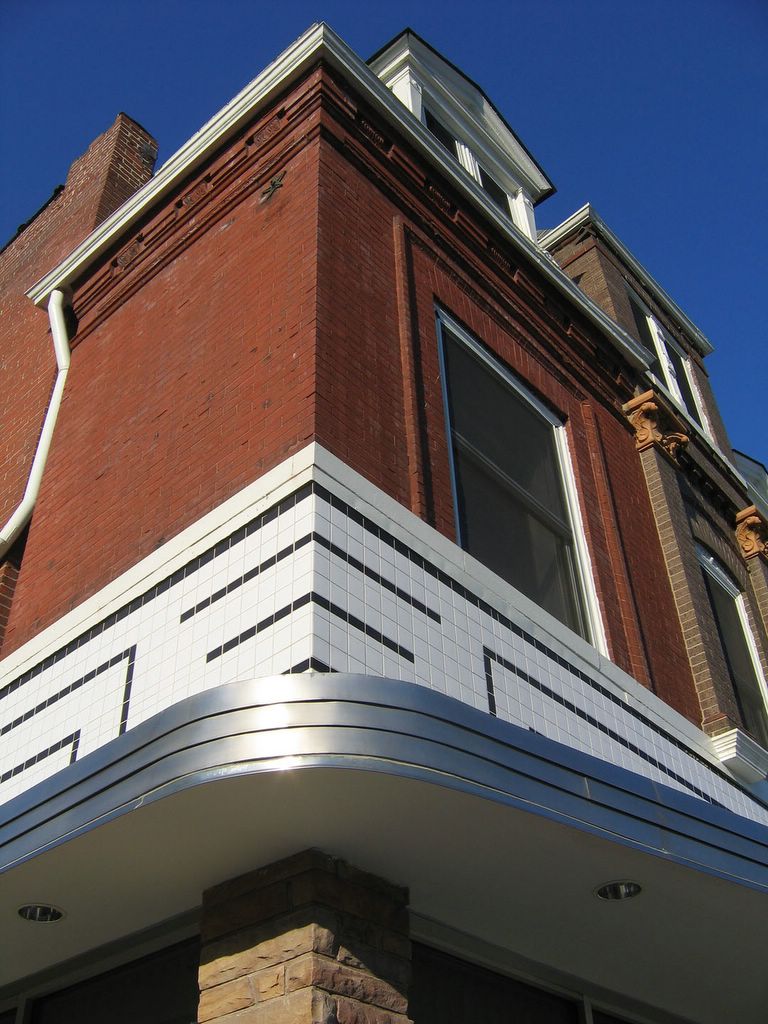
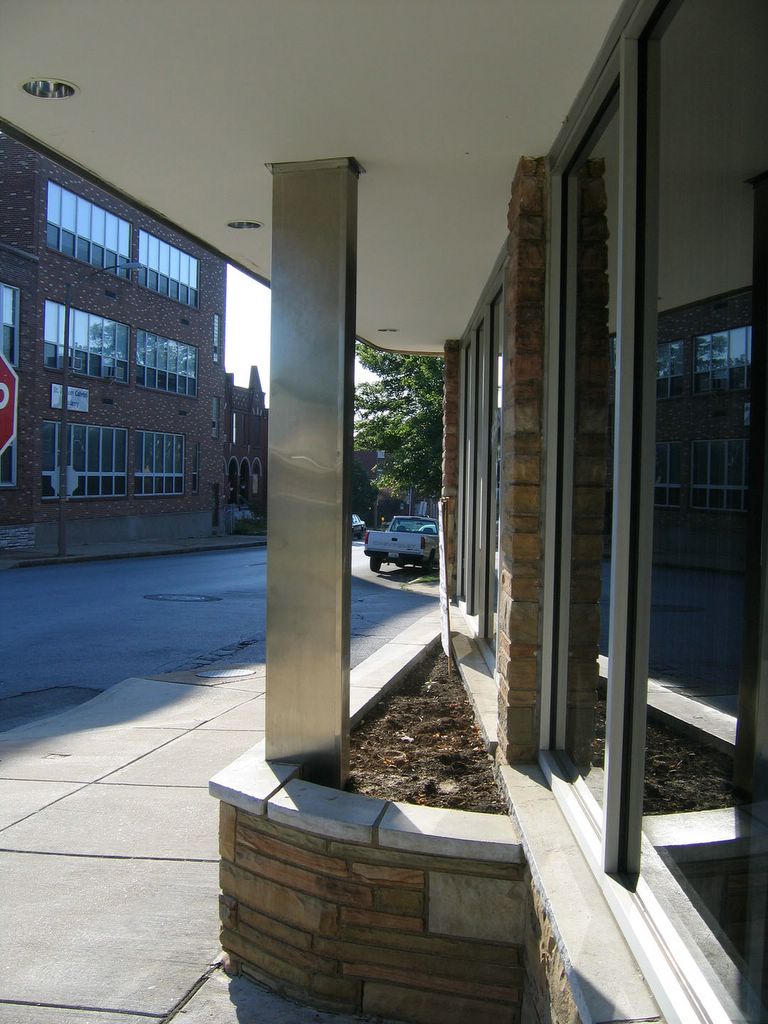
By taking a curious right and heading down a steep hill, I rolled back in time to a Jet Set Duplex Park. A paisley-shaped street is ringed with pristine examples of optimistic car culture multi-family dwellings, all butterfly winged carports and picture windows.
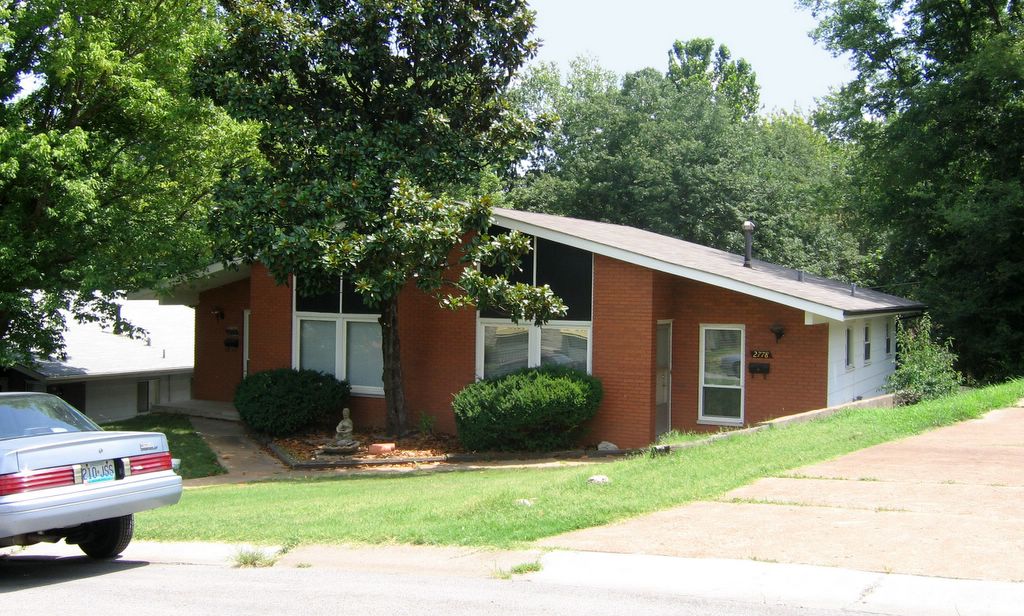
There were a few variations on the theme (above), but all are low-slung duplexes lovingly tended to.
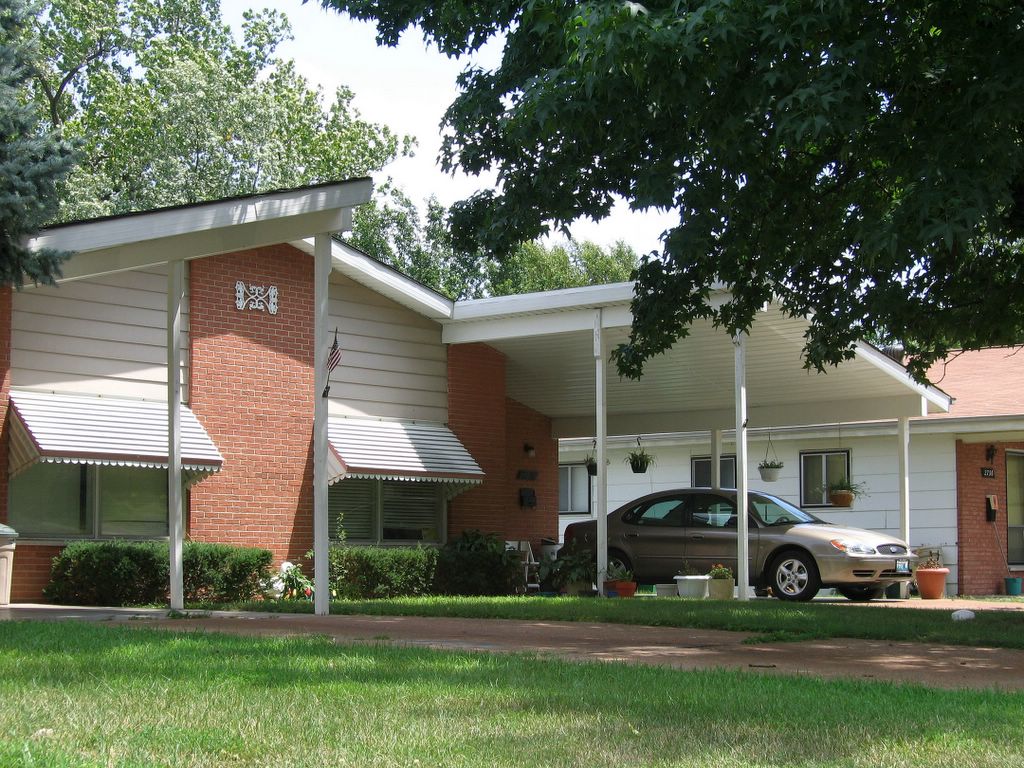
I was numb as I stood gawking in the middle of the court, feeling as if I’d stepped into a 1960s postcard. The intense heat of the day made my head woozy, so I assumed I was imagining this clean and precise oasis of residential modern in the midst of a forgotten swamp land. But it was true! On this island, martini shakers still rattled at hibachi BBQs while alligators and scorpions surely lurked in the overgrown lawns of the homes outside this bubble.

How did I miss this place all these years?
I asked my parents about it, and they, too, had no idea it existed because they didn’t even realize you could go east of Huiskamp Ave in that neighborhood. So I didn’t feel like such a dunce for overlooking it. Plus, it’s tucked into the valley of a large dead end.

St. Louis County property tax records show that my Mid-Century Model Train Neighborhood was built in 1968 as Glenview Court. Meaning, it was built while we lived in the area, but sailed under the radar.
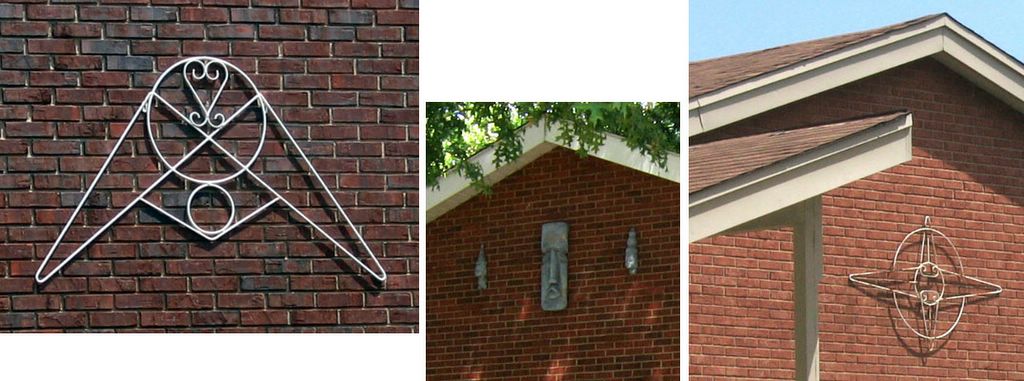
Most every duplex still retains its original and unique metal medallion on the front facade (note tikki stone faces, above middle), and the owners sit in lawnchairs under their carports wondering why this chick is casing their court. I keep returning because it’s like the Demolition Gods threw me a bone, allowing a new chapter within the doomed pages of my architectural biography.

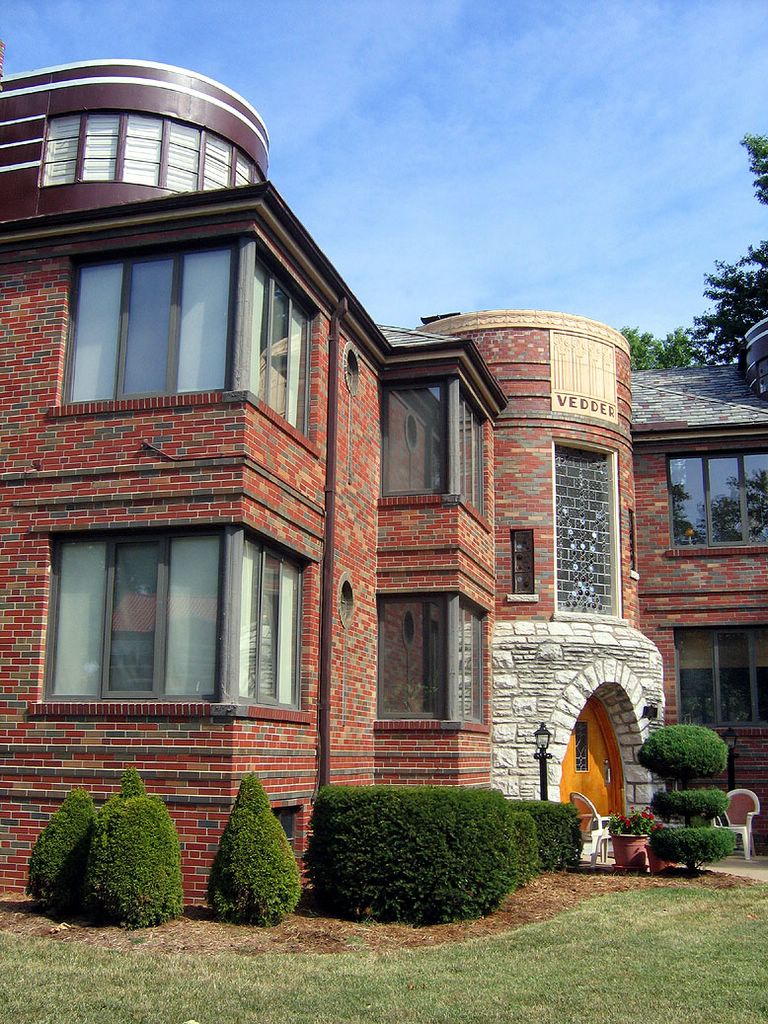
Vedder of St. Louis Hills


Nottingham & Locke in St. Louis Hills
South St. Louis, MO
It’s the Sybill of apartment buildings.


The St. Louis Hills website says of it:
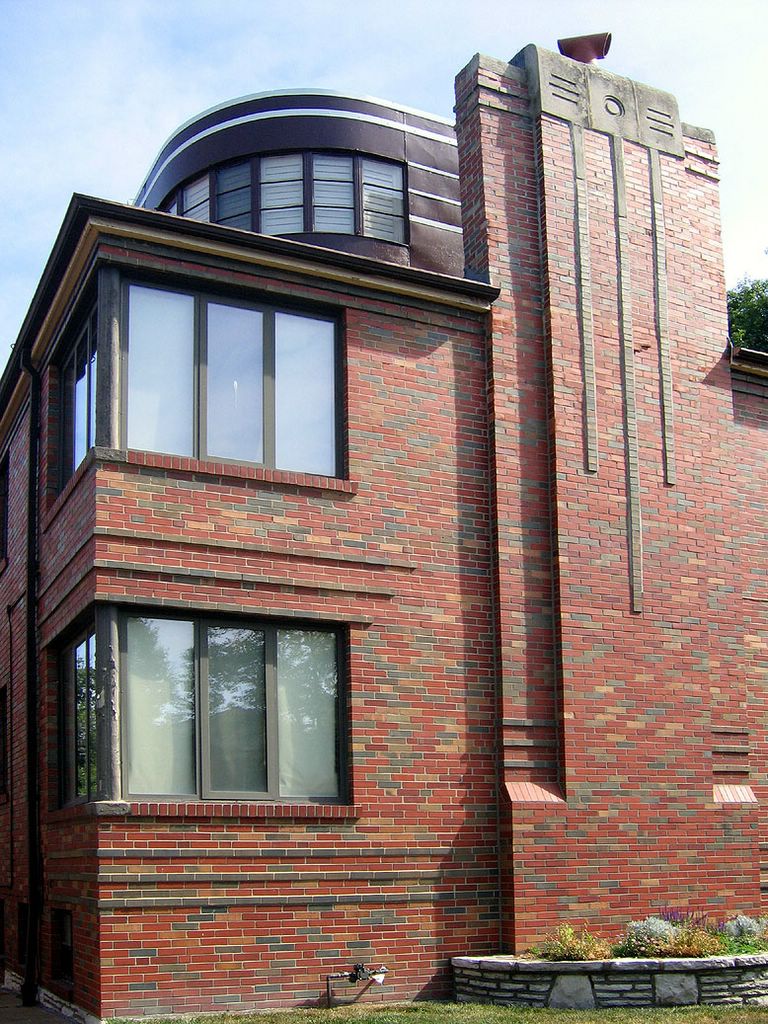
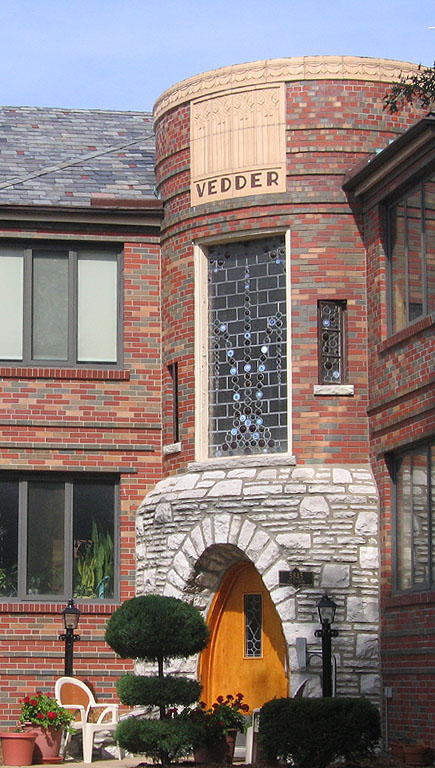
On Nottingham Avenue, closer to Francis Park, is one of the Hills’ architectural landmarks, the Vedder apartment building. Rich in art deco details it boasts curved corners, casement and circular windows, and complicated brick works. What makes it particularly special is that all six units have penthouses.

What’s also special is that everyone who lives there appears to be creative and/or artistic (as witnessed by what shows in their windows), and the place is in immaculate shape (save for the front yard fountain remaining dry).

From this view, it’s a ship.

From this view it’s a castle.
The fountain gives it a public park feel.
Depending which angle it’s viewed from, it’s 1930’s Streamline Deco or Middle Ages German fortress.
And because I’m merely a human of a certain age, I always think of Pearl Jam’s Eddie Vedder when I see the terra cotta nameplate. That part is against my will – I’m not a fan. But this place is certainly the most unique building in St. Louis Hills.

How Much Is That Marilyn in the Window?


The new Marilyn in the window is here! An ode to swimming pool weather, a still from Marilyn’s last (uncompleted) film which also serves as commentary to the St. Louis heat wave: Something’s Gotta Give.
The backstory is here.
The Marilyn previous to the above is here.

An extraordinarily gifted photographer friend of mine has been enthusiastically following the Marilyn Shrine since being introduced to it. Upon seeing this latest exhibit, she wondered how the artist could stand to work in such anonymity and solitude, for artists thrive on the experience of others viewing their work, commenting on it, and (hopefully) buying some of it.

While I do wish Kabbaz would come forward and answer a dozen questions, I’m in awe of the seeming integrity of his mystery. His love for Marilyn is shared in a consistent and heart-felt way, and because of the very public nature of his solitary art gallery, he has a potentially bigger audience than most any fine artist. His work is in a high traffic area, but it sits back quietly, waiting for the true believers to find it, ponder it, keep an eye out. All of this goes on without the artist ever knowing or caring. It’s merely his expression of adoration, unsullied by any modern standards of artistic commerce and publicity. While alive, Marilyn let herself be bought and sold, but these paintings of her are not for sale because love is priceless.

For Immediate Release


Copy of a 1980’s display window poster

From the Ecology of Absence news desk:

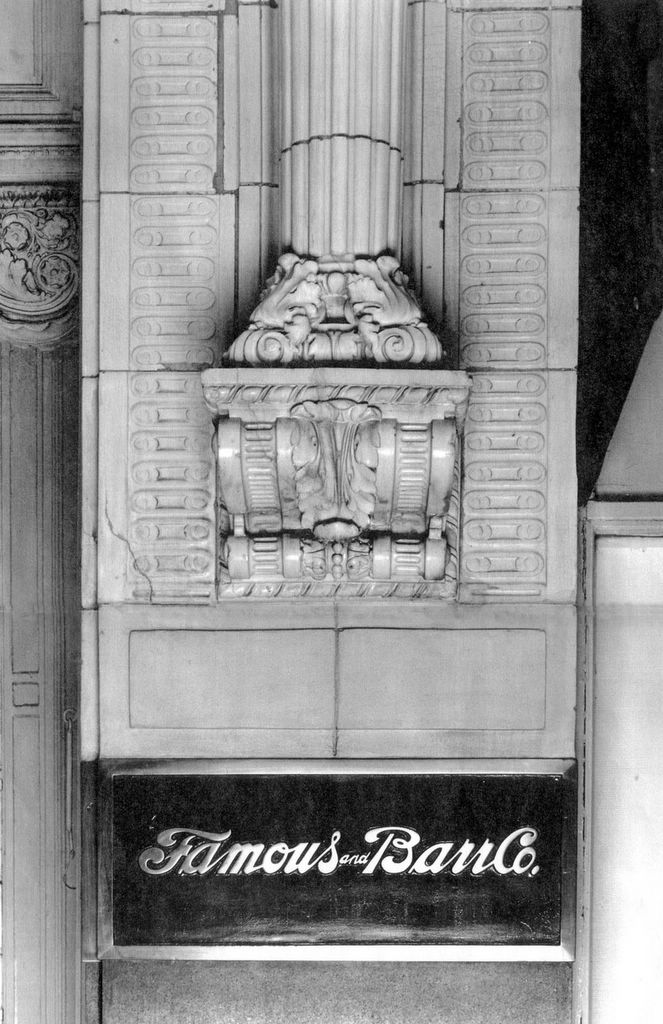
DOWNTOWN FAMOUS BARR WILL REMAIN OPEN WITH MORE VISIONARY NAME

SOUTH COUNTY-Downtown St. Louis’ historic Famous-Barr store will remain open, say officials at Federated. Federated, a large conglomerate, recently purchased the May Company, a local conglomerate that owned Famous-Barr.

As part of a national campaign, the name of Famous-Barr will be changed. Sources at Federated have said that early on, the plan was to change the name to Richard M. Daley’s Chicago Marshall Fields. They cited the fact that Chicago’s history is more important than St. Louis’, as evidenced by the fact that Chicago is bigger, contains more money, has taller cheaply built buildings, and is larger than St. Louis.

However, the plan to change Famous-Barr to Richard M Daley’s Chicago Marshall Fields has been scrapped, citing that the new name still contained some historical merit of some sort, and that historical merit is bad for profits. Federated Spokesman Bort Stunt stressed that, “Nothing has ever happened before now, except for baseball and plastic columns on houses. There were also ice cream and cars, which happened in the 1950s, and trucker hats, which happened in the 1970s, but that’s it. Nothing is going to happen after tomorrow, either.”

In that progressive line of thinking, Federated has drafted a new name for the Downtown St. Louis store: Francis Slay. “We wanted to name it after the insightful, door-closing dealmaker that made it possible for us to keep our Downtown location open, despite incredible odds,” said Stunt at a press conference Monday. “We want to express to everyone in St. Louis City that we are doing them a gigantic favor by not cruelly and pointlessly shuttering their store, and no single person has understood that better than Mayor Francis Slay, except possibly his pet newt Richard.”

The renamed Francis Slay store will feature different products than what Famous-Barr currently sells. Federated plans to completely axe the children’s department, in accordance with local budgeting policies, which will have all children moved out of the city as early as fall 2006. The section will be replaced with an extensive selection of taupe, off white, and bone colored polo shirts, in a bold, visionary move that is intended to predict the rapidly changing demographics of Downtown and of the city itself. “We want to be on the cutting edge,” announced Stunt, “and we do mean cutting.”

But even more than interior changes to the new Francis Slay store, St. Louisans will notice the extensive exterior changes. Federated plans to increase parking near the store, citing that Famous-Barr’s parking garage “is sometimes as much as 40% occupied” and that the extra spaces soon to be available in the Century Building Memorial Parking Garage under construction on 9th Street are “simply too far away to walk, at a whopping two blocks’ distance.”

In order to make shopping Downtown convenient and pleasant for its customers, the Francis Slay store will feature an unprecedented 49 square blocks of parking. The lot will stretch from the former Lucas Park, across the former art galleries on 10th and Locust Streets, over to the former Richard Serra sculpture on the Gateway Mall, and up to the front door of Francis Slay. It will feature up to eight trees, although the Federated Planning Department has yet to finalize the number of actual trees to be planted. The lot may preserve as much as four percent of the existing street grid, though that number is also still on the drawing boards.

There will be one other prominent new feature to the exterior of the Francis Slay store. In an effort to draw more attention to the store, a new sign will be located on each of its four sides. The four signs will be identical. Instead of touting the store’s name, they will simply and elegantly consist of an image of Mayor Francis Slay’s head. Stunt said, “We wanted to pick something that symbolizes power, profit, and prestige, and could think of no other symbol more evocative. We almost chose a picture of one of Francis’s dogs, but decided to save that for the new dog day spa and salon that will replace Harris Stowe University.” The four heads will feature glowing eyes which change color according to the number of buildings being demolished that day on the North Side, to let shoppers and Downtown drivers alike know approximately how much progress is happening in the city that day. Designer Sally Patronage wrote in her press release that the changing eyes will give passerby “the opportunity to feel the heartbeat of the city at any given moment. …as we all know, Francis Slay is the lifeblood of this city. We would be nothing if he did not heroically keep all of our businesses open, like they should be anyway.” To help portray the idea of keeping a beat, the signs will rotate and whistle every hour, on the hour.

–AP

Buildings Unfolding

3819 South Grand, near Chippewa
St. Louis, MO
We can watch How Buildings Learn if we leave them be, unfolding organically with passing time. A good building will always be useful, if not always aesthetically correct. We’ve all seen atrocious new facades slapped onto old commercial buildings (the cedar shingle craze of the early 1970s is horrifying), but we’re also blessed with graceful re-dos (Vitrolite storefronts in the 1930s & ‘40s) and bold transitions, like the building above.


I wish I knew more about this building than what is apparent. A 3-story turn-of-the-20th house became pregnant with a commercial building. No cheesy attempts to integrate the traditional with the modern were tried; each part was left to be what it needed to be. And the addition is an ultra-modern structure that I love a little too much. Its simple lines are writ large and confident, its textures both radical and respectful of the house it nurses on. Remove it from this spot, plop it anywhere else (Palm Springs) and it would still radiate jet set dentist cool.

The place has been spit shined (though I miss the green vines crawling up the yellow plastic screen wall) and put up for sale. There’s not a chance in hell that this building will remain as it has grown. Should a new owner decide to faithfully rehab the house, the Chevron Charmer is toast. Please let it be for sale for quite a long time.

Five Star Senior Center
2832 Arsenal, St. Louis, MO
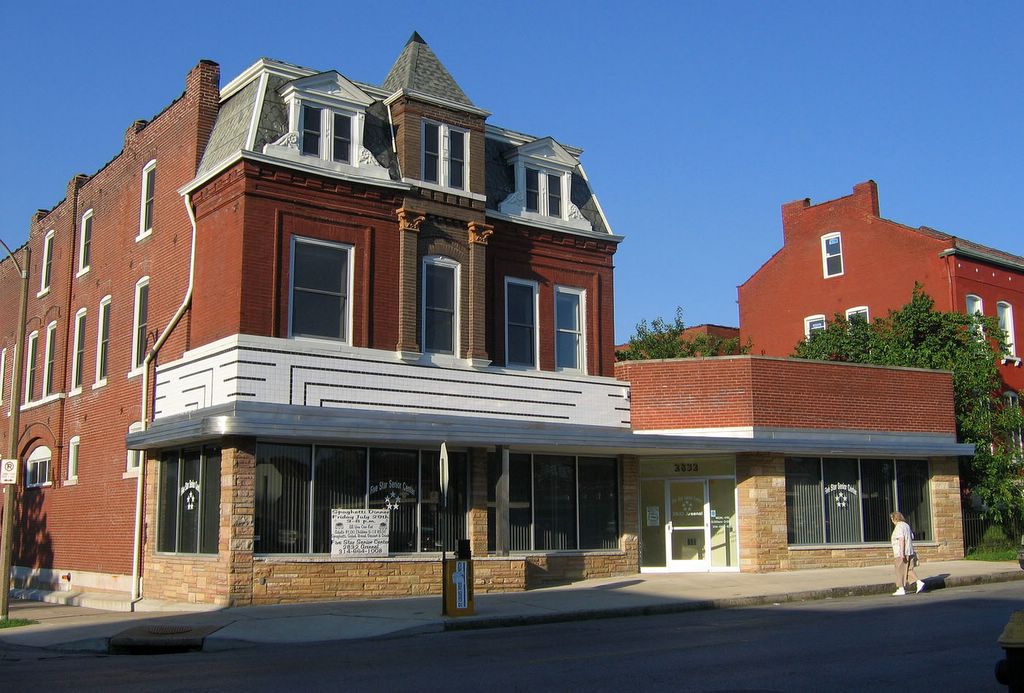
Just a scootch east of Gravois is this beauty, an architectural trifecta.
From top to bottom: 1890’s, 1930’s, 1950’s.
It’s an intriguing history of shop owner renovations, with each new layer preserving just enough of the previous to make it an affectionate family scrapbook.


While taking these photos, folks started arriving at the building, and one of them turned out to be the building’s owner, who was genuinely happy to meet someone who got its charm. Michael W. Howard is executive director of Five Star Senior Center, a not-for-profit that provides meals, transportation and social activities. When he bought the building to renovate into Five Star’s new home, the city wanted him to peel it back to its 1890 self. Mr. Howard wanted to keep it as is, and challenged the city to come up with proof of what it once looked like.

At this point I mentally flipped out: This man put up a fuss to keep this building as it grew!? He’s my new hero!
Not only did the city let him be, but he worked with Grubbs & Associates architects to polish up the multiple exteriors and to fully gut and renovate the interior of the ground floor.
Oh, man, he’s architecturally god-like!
I was slightly dazed with awe when he gave me a tour of the inside. It was designed with a strong and tasteful open plan, with gorgeous morning light streaming into the front sitting room and administrative offices. Expansive entry arches and substantial moldings flowed back through to the large dining hall. Upon complimenting him on how thorough and handsome the details are, he said he didn’t want to just slap up drywall and partitions, he wanted to do it properly, which is why he hired an architect (not a contractor, but an architect) to help him with his intent for the place.

And because of this kind of thought about the environment he wanted to create for the seniors, he created a space that felt alive and welcoming, full of self-esteem and smiles. Mr. Howard has added another chapter to the story of this building, allowing it to continue unfolding. Bravo!

South Side Same, Chapter 2

shop 255, here 255); margin: 2px;” src=”http://photos1.blogger.com/img/32/5015/400/louisiana%20%26%20chippewa.jpg” border=”0″ />
Louisiana & Chippewa
South St. Louis, more about Missouri
When it comes to South Side Copycats, the buildings are usually spaced well apart. In this case, the folks involved shot their entire wad at one intersection. Two identical (and massive) buildings mirroring each other from across the street.

I have been at this intersection dozens of times without ever noticing the mirror effect. It took this brilliantly sunny summer morning for me to finally see this odd and beautiful sight.

Northland Demolition Part 3


Today’s visit to the Northland demolition site was about absence. Review this to see what was once anchoring the middle right portion of the above picture. There are now two loose ends with an enormous gaping hole between them.

On my last visit to the site, this building (above) was still standing. It was originally the post office. Note the cut-out on the left end of the building that was the loading dock, and how the enitre packge is very Neutra in line and execution.

Ignore the absurd cap that was put on its front (above) when it became a Family Dollar, and note the placement of simple geometry to indicate entry, lobby and main body. The area where the handicap parking sign stands now was once a decorative concrete block sunscreen. That was a very popular form of solar protection in the late ’50s/early ’60s, (and is still seen widely in Southern California), and protected the lobby from the harsh sun, at least until central air was installed.

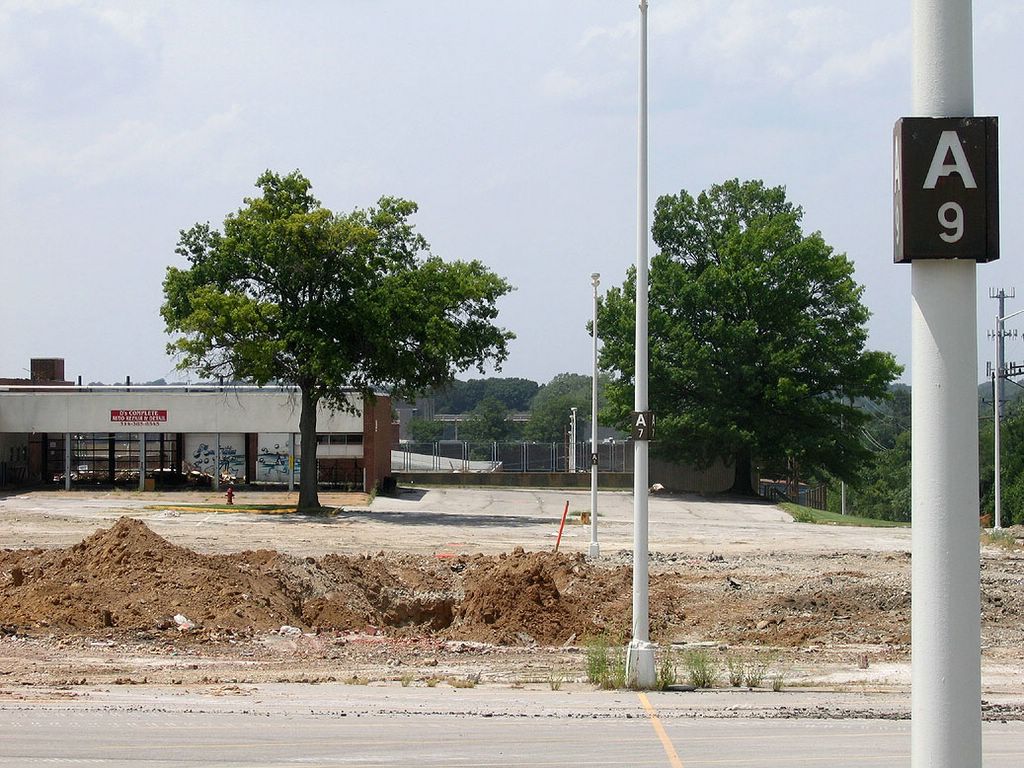
Today, all that’s left of the building is….nothing. Just this shallow hole of dirt in the blacktop. 22 days ago, there was a building, and now there’s nary a tiny remnant. How in the hell did they demolish and clean up so fast? They’re still picking away at the carcass of the Famous-Barr building, while this one just vanished into thin air!

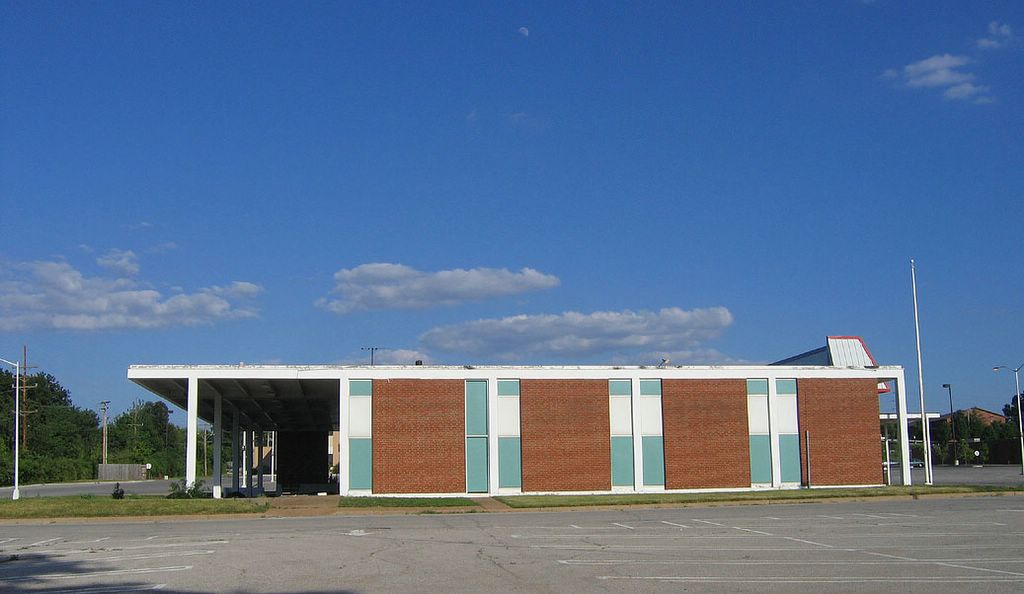
(Above) The last two original outlot buildings (Rapps/Schnucks to the left, Famous-Barr Automotive to the right) can obviously be dispensed of just as quickly as the post office. Considering how quickly they’re now moving, I need to visit the site once a week. But it’s getting harder to get onto the site, as they’ve blocked off all but 2 of the many entries. No matter how or when, something tells me this is the final photo of these buildings.

Harris Armstrong For Sale

harris armstrong architecture photos by toby weiss
Harris Armstrong was St. Louis’ most famous modern architect. Some in-tact examples of his work include (above left) a residence in South St. Louis up behind the Donut Drive-In on Chippewa, and a commercial building (above right) on Brentwood, across from Brentwood Square. Some of his remuddled buildings include the U-Haul skyscraper at Kingshighway & Hwy 44, and the former Library Ltd./Borders building at Forsyth & Hanley in downtown Clayton. Should architect Andrew Raimist gets some free time, he will unleash a proper book on the work of Harris Armstrong, which would cover a prolific 4-decade career of residential and commerical Midwest Modernism.
harris armstrong homes in webster groves mo photo by toby weiss
A Harris Armstrong-designed house from 1951 is for sale in Kirkwood. My lovely friend Marla had previously waved her Modern Magic Wand and gave me my first true taste of Lustron; now she graciously allowed me and an interior designer pal to get a peek inside an Armstrong.
harris armstrong in webster groves mo photo by toby weiss
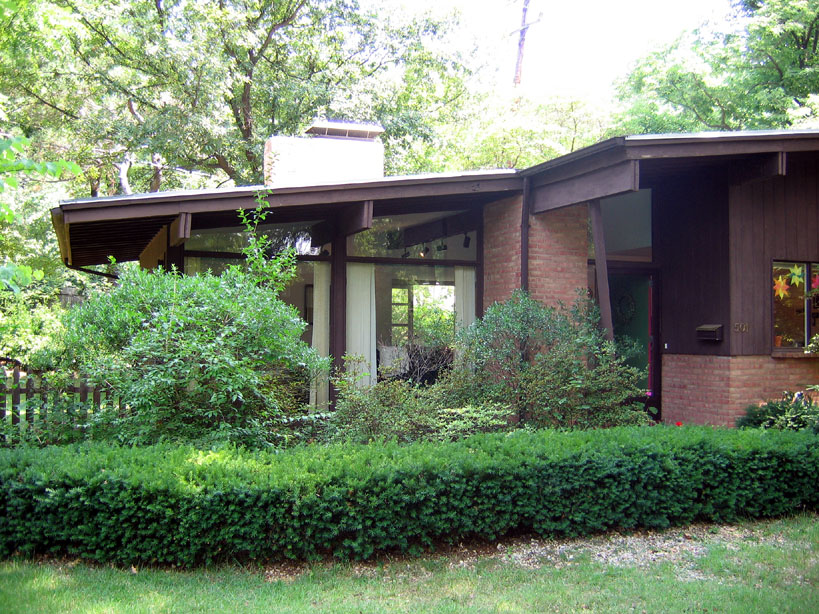
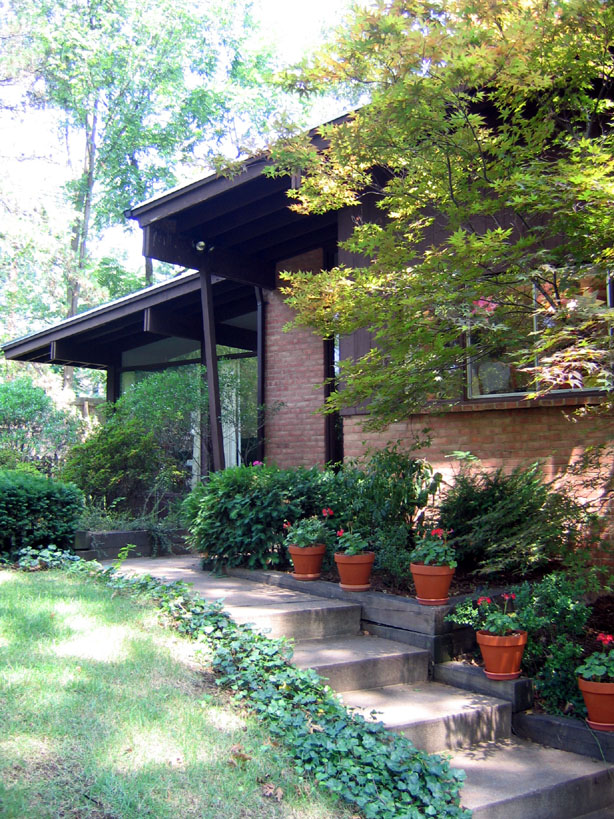
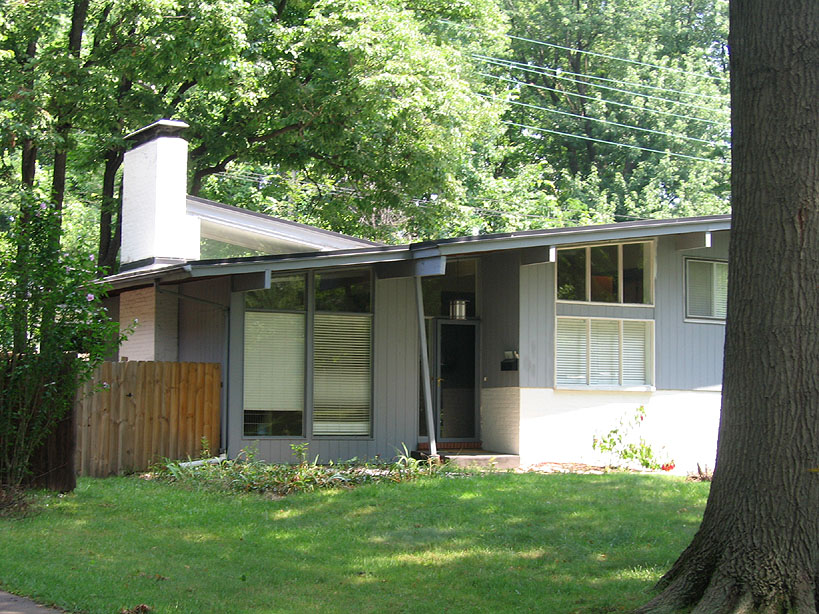
It’s the lead house of a cul-de-sac off Woodlawn Avenue, with 3 bedrooms, 1.5 baths, 2-car garage and an asking price of $249,000. From the front, its lines are very spare and the detail of the wood beams under the eave of the roof continuing uninterrupted through a large expanse of glass and into the living room is a nice touch.

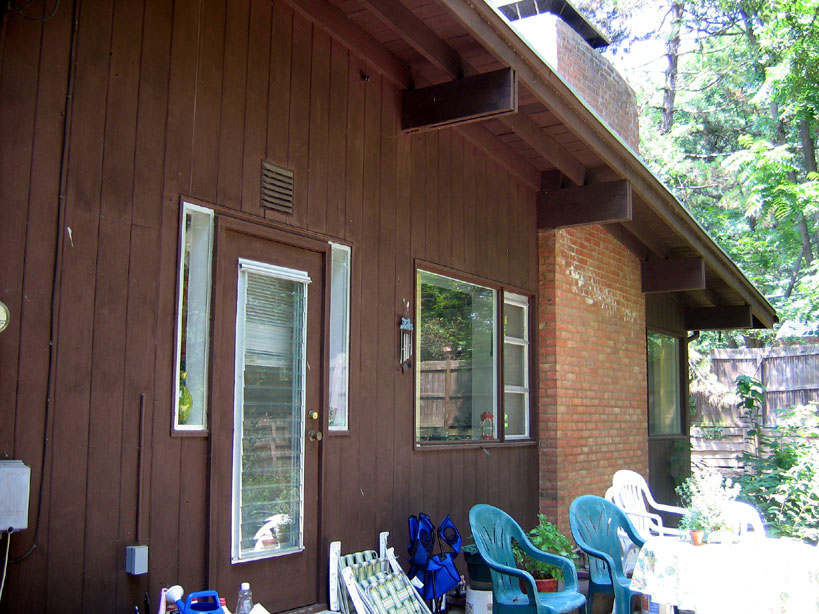
The backside of the house severely lacks the subtle drama of the front, and that much brown becomes depressing. I refrained from scratching through some wood planks to find the original paint color, and while Armstrong favored natural colors for private residences, something tells me this brown was not it.
interior of harris armstrong home in webster groves mo photos by toby weiss
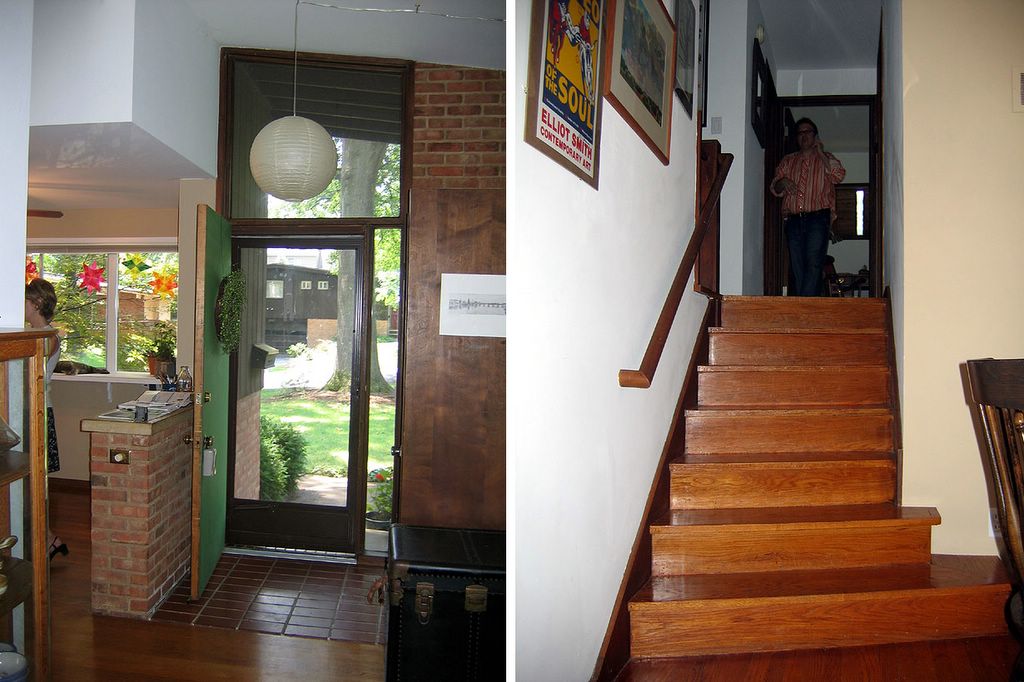
Inside, the entry foyer (above left) packs a bit of suburban ranch punch, though someone added a clumsy plywood guest closet at some point, breaking up the brick lines.
There’s plenty of light spilling into the living and dining room, and the stairs (above right) leading up to the bedroom level politely thrust at a jaunty little angle.

harris armstrong webster groves mo photos by toby weiss
2 original light fixtures remain; one in the living room (above left) and the other above the entrance to the tiny, galley kitchen (above right).
harris armstrong webster groves mo photos by toby weiss
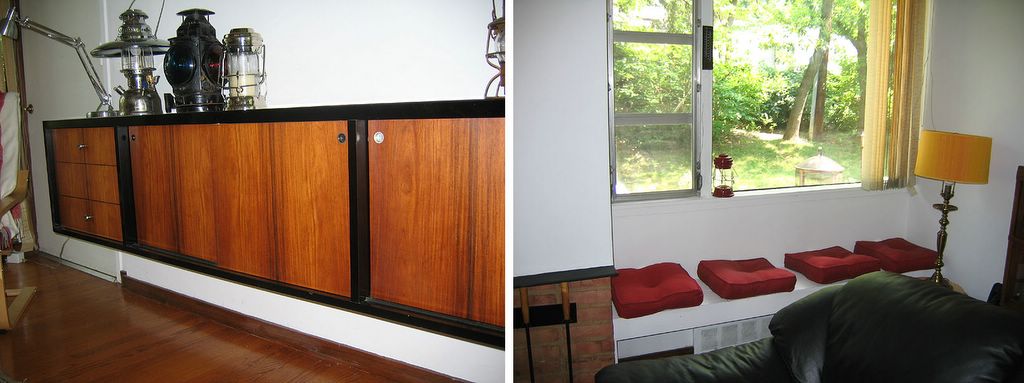
The only true Armstrongian touches are the handsome, floating cabinetry (above left) and a built-in window seat (above right) in the living room. After that, everything about the house was utterly normal and somewhat bland because of years of familiarity with this house type. Even though it’s a good size for a family of three, our current American standards of acceptable square footage makes the house seem small.

The designer pal summed it up best when he said the house looked like Armstrong had made a quick sketch of an idea and then handed it off to a builder. That most of the other houses in this cul-de-sac are slight variations on the theme (see next door neighbor, below), shows the builder ran with the idea, even improved upon it.

So, is the house really worth $249K?
Marla said $210K is about right for the immediate area, so the pedigree jacks up the price.
With a different exterior paint color (or two) and some extensive cleaning,* it would be a sharp, split-level ranch house that Harris Armstrong paid a bit of attention to.

* When a realtor suggests improvements, it’s not to pass judgement, but to make the house attractive to buyers, which makes it sell faster, which then benefits everyone involved. If the realtor should mention taking a quick swipe to yards of cobwebs on the exterior, man, you really should. It’s the least you could do if you want to sell the house for anywhere near the asking price.

Louis Sullivan’s Auditorium Theatre

auditorium theater louis sullivan chicago illinois photo by toby weiss
The Auditorium Theatre
Corner of Michigan Ave & Congress, Chicago, IL
As an ardent fan of architect Louis Sullivan, I’ve stalked the outside of the Auditorium Theatre many times over the years, but could never get in. These exterior shots are from July of 2002. And here’s some history.

auditorium theater louis sullivan chicago illinois photo by toby weiss
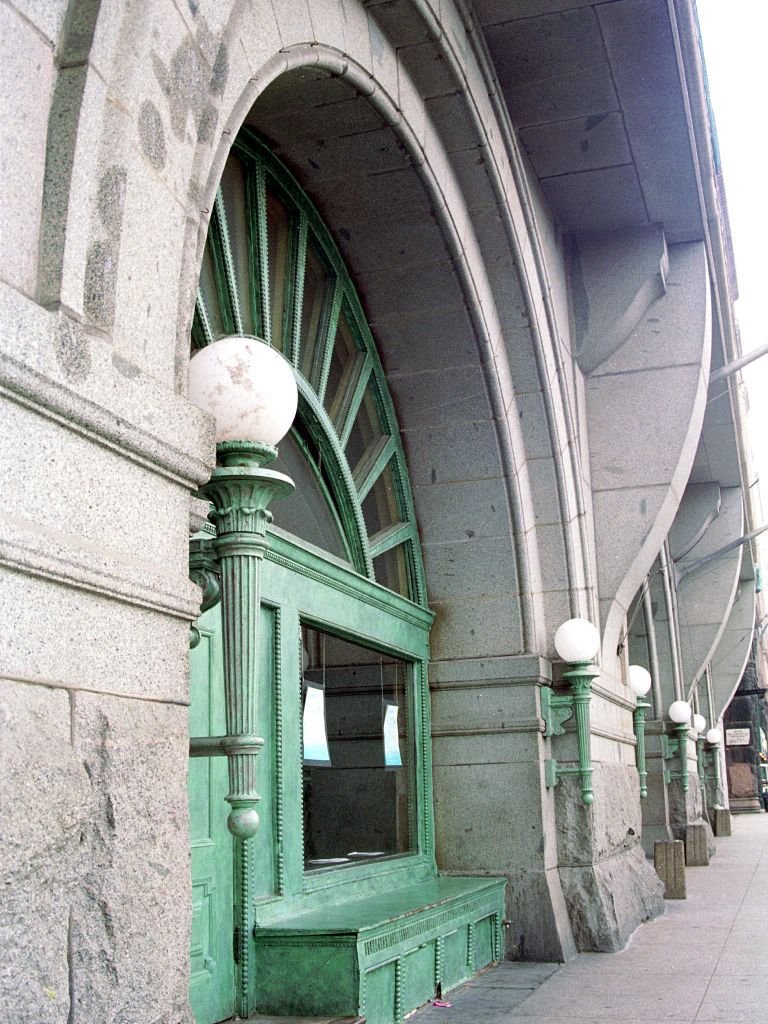
Along the Michigan Avenue side of the building, I love that Sullivan designed built-in benches for the benefit of public rest, especially since he was a reclusive crumudgeon.
auditorium theater louis sullivan chicago illinois photo by toby weiss
Along the Congress side is the official entry to the Auditorium Theatre. While everyone else has seen Abba or Roxy Music inside the place, I’ve always stood on the outside, trying to get in. And then came my chance on July 9th, 2005 when Robert Plant & The Strange Sensations appeared. I love me some Percy, but I was equally psyched to finally get inside.
auditorium theater louis sullivan chicago illinois photo by toby weiss
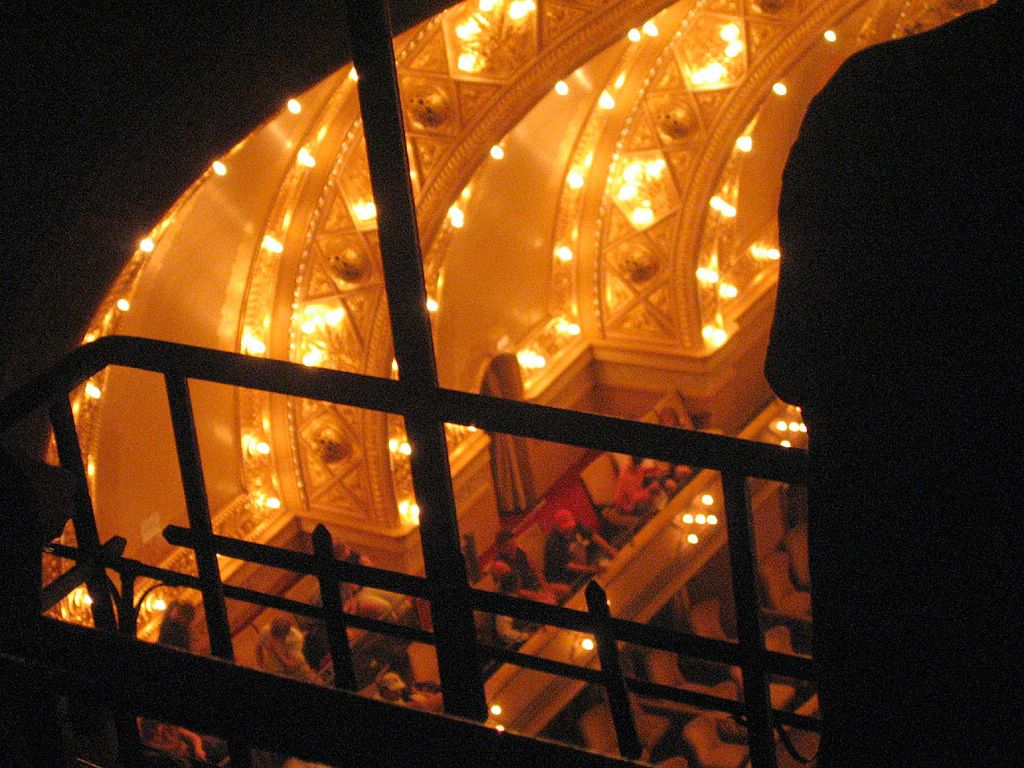
Because of numerous “No Camera” signs, I smuggled mine in, and couldn’t remove it from its hiding place for a bit. So, instead of snapping, I got to experience the sight and feel of going from street level all the way to the very toppermost of the auditorium, watching the decor ascend from grand to utilitarian. The main auditorium was gorgeously aglow with thousands of white lights, its ornament stately rather than flowery, a motiff that Sullivan preferred.

There was one glaring problem with the place, though.
The Death Pod
At some point during the 20th century, they added more seating by inserting a rectangular cube that hangs out and over the last row of balcony seats, proper. It looks like a secret club house that was nailed into the ceiling arches, and you reach it by crossing foot bridges. This is where our seats were.
As we crossed the bridge, I could feel it rearing upward, then through the dark portal and into a narrow, rickety wooden ledge that leans dangerously forward and down, over the main auditorium. As we tried to find our seats, I kept instinctively leaning back, holding onto loose wooden rails in case a sudden vibration sent me tumbling forward to my death, or major injury. It was too dark to find our exact seats, so we waited it out until the lights came on.

I took that opportunity to check the support systems of this add-on structure. While ornate columns supported everything in the building, nary a one supported the pod. I could find only wire suspension rods attached to the ceiling holding the pod in place, which would explain why it shook every time someone walked around in it. And I was spooked; I did NOT want to sit in that, that…Portal of Doom. But I decided to take some pictures, calm myself down, because I didn’t want to embarass myself in front of the others with crazy thoughts of crashing to our deaths while Robert Plant wailed “When the Levee Breaks.”
auditorium theater louis sullivan chicago illinois photo by toby weiss
Above is the tiny tile work on the stair landing leading to what was once the building’s office lobby, and below is a slice of the actual lobby itself. The colors and finishes are different from what’s shown in this old postcard, but it’s still impressive.
auditorium theater louis sullivan chicago illinois photo by toby weiss
While snapping the above picture, I got busted by a security guard who also moonlighted as a docent for tours of the building during the week. He told me that the interior of the building was copyrighted, so no pictures were allowed so as to keep people from stealing the designs. I about choked on the irony of this statement, telling the security guard that back in the day others made a mint blatantly stealing his designs, while Sullivan died destitute because of this. He’s long since dead; isn’t it a little late to be protecting his assests?
Either way, put the camera away, he said.
Then I told him about my fear of the Death Pod, and he said, “Yeah, it is kinda creepy up there.”
And now I had to join the Baton Death March to find our seats.

We sit in the seats and I’m breaking out in a slight sweat. A large woman stomps up the stairs and the entire structure lists forward. I’m having difficulty breathing.
I’m cooking up an excuse to remove myself from this horrific structure when my dear (and very smart) friend pipes up with: “I’m not sitting here. I can hear the screams of my ancestors.”
GLORY HALLELUJAH! We’re getting off the Titanic before it crashes into the iceberg!
We sat on wooden benches against the lobby wall one level down. Obviously not the best seats, but we could listen and watch without fear, enjoy the show safe in the knowledge that for us there would be a morning after.
auditorium theater louis sullivan chicago illinois photo by toby weiss
After the show, I dodged security guards to take the above shot of one of a row of windows ringing the ground floor lobby. The wood panel insert removes to reveal coatcheck, snack and other customer service functions. A guard saw my flash, so I darted away as he came toward me. They’re paid to protect Sullivan’s design legacy, but only after they sullied it with that shoddy, creepy Death Pod.

Back Home: Louis Sullivan’s Wainwright Building graces downtown St. Louis, a skyscraper pioneer that gets (and deserves) much architectural attention.
One block north – at Olive & 7th Street – is another of his St. Louis buildings, built about a year after the completion of the Wainwright. It’s so overlooked that many Sullivan scholars are unaware of its existence, even though they may walk past it daily. In a future post, I’ll cover the Sullivan Underdog Building.

Northland Demolition Continued

WHERE IT STOOD ON 6.19.05
northland shopping center demolition photos by Toby Weiss
Here’s where we left off, and now let’s continue…

northland shopping center demolition photos by Toby Weiss
On the upper level looking north (above, left) & south (above, right) onto what was and what’s left of Famous-Barr.

northland shopping center demolition photos by Toby Weiss

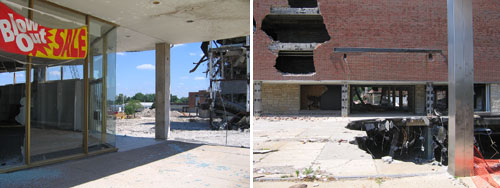
(Above, left) I’m standing “inside” the FB now, about the level of the roof of the sub-basement and looking up at the “Blow Out Sale” store front. Standing in the same spot, I look up to my left and the escalator still strains to take me to the second floor (above, right). I look down to my left and study the massive pile of building debris tumbling into the bottomless dark basements waaay below ground. I swear I see pieces of what I covet dearly: the stainless steel that made up the “Northland” sign. As I start to climb down the pile to investigate further, I realize I’m breaking the very first rule of Demolition Spelunking:

Do Not Do It Alone!
There must be someone else around to at least know you disappeared in the building and alert the authorities.

I’m by myself, crap! But my chances of getting one of those mangled letters is right before me – 70/30% chance of success.
A few more steps down the shifting pile, and I get a vision of the suffocating horror of the 30%, and stop.
Crap! But a letter is right there, I swear it!
I’m supposed to be at my Pop’s Father’s Day BBQ in Brighton, IL in 40 minutes, and I’m not supposed to be getting these clothes dirty (too late), and I probably should also arrive in one piece… I had to let it go.
It still hurts.
So does watching this.

northland shopping center demolition photos by Toby Weiss

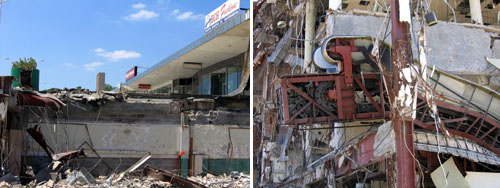
Even as the place whittles away, it’s still an architectural love affair. I can’t get over something so modern, sleek and strong (above left) being torn down. And I see the old, whimsical wiring get up (above right), and marvel that the place hasn’t half burnt to the ground.

northland shopping center demolition photos by Toby Weiss
(Above) Against what’s left of the upper level wall, staring down to the lower level.

WHERE IT STOOD ON 6.27.05
northland shopping center demolition photos by Toby Weiss

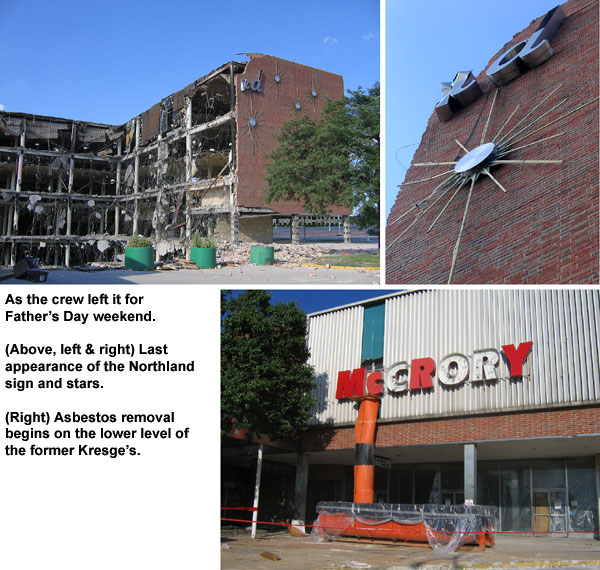
Letters and stars are history (above right), as the rest of the building now looks like a picked-over Thanksgiving turkey. Upper level at the former Kresge’s/McCrory’s (above right), demolition workers pulled all remaining interior trash out to the curb, which then sprouted an absurdist lawn mower blooming atop the greenery.

northland shopping center demolition photos by Toby Weiss

Most all of the lights still burn at night, which gives the place a submarine feel, an underwater eeriness. On the north side of the lower level, I get to see interiors that I could only half make out during daylight (above left, former Worth’s/Studio 150). And the promenade towards what was Famous-Barr (above right) features perfectly lit destruction.

northland shopping center demolition photos by Toby Weiss

(Above left) Lower level south side, looking at the rounded bank and a (long-blocked) stairwell up to the top level. It was an aresting sight, especially the light on inside the utility area to the left of the stairs, which felt oddly warm and inviting.

(Above right) Man, I so want this in my backyard!

WHERE IT STOOD 7.04.05
northland shopping center demolition photos by Toby Weiss

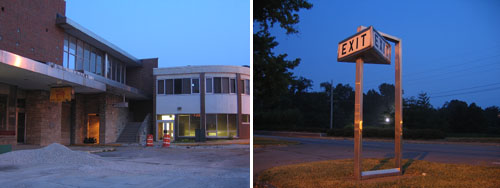
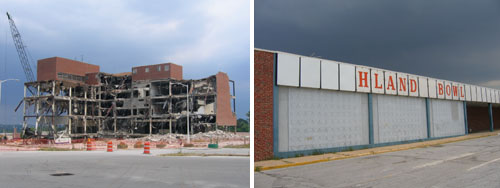
(Above right) The Northland Bowl sign reappears!
The (now-vacated) Ambassador took down one of their signs, and unearthed both the original name and function of the building that was attached to Northland’s lower level north side in 1967.

northland shopping center demolition photos by Toby Weiss

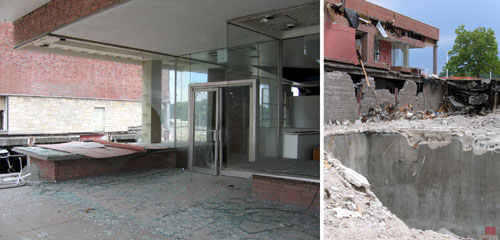
(Above left) Upper level north next to what was the FB, the former Baker’s Shoes/Kingsbury’s Shoes literally stands at the edge of the abyss.
(Above right), standing in the FB pit and looking up at the same store.

Even though I’m painfully sad over this loss, it’s been fascinating and absorbing to see the physical bones of the place, construction details, how damn solid it is…was. I wonder if any of the men who helped build the place 49-50 years ago have come out to watch it be taken apart?

northland shopping center demolition photos by Toby Weiss

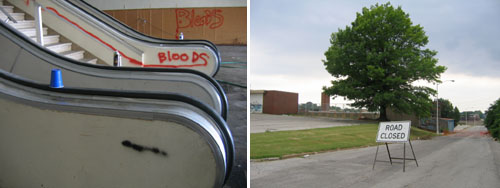
(Above left) Lower level of the former Kresge’s, and I never run into anyone inside these buildings while I’m there during the day. They must only come out at night. But no one cares about this site, so they could very well spray paint freely while the crews are at lunch…
And it’s getting hard to travel Northland by car because they have closed off most all of the entrances and roads (above right) around this massive place. Also note the big, beautiful 50-year old tree. Sorry, goodbye.

Here’s some thoughts from other people about Northland. I’ve also received some wonderful notes from folks who grew up in the area, and are now watching it leave via my photos and/or their special Goodbye Treks to the place. Thanks for sharing how much you loved the place, too.
More to come.